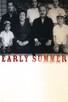
Early Summer
1951, Drama, 2h 4m
11 Reviews 2,500+ RatingsYou might also like
See More
Where to watch
Early Summer Photos
Movie Info
Cast & Crew
Noriko Mamiya
Koichi Mamiya
Fumiko Mamiya
Aya Tamura
Shige Mamiya
Takako
Critic Reviews for Early Summer
Audience Reviews for Early Summer
-
May 12, 2018There is a great harmony in everything about this film, which has a Japanese family of three generations wondering if it's time for the 28-year-old daughter (Setsuko Hara) to get married, and proposing an opportune match. Director Yasujiro Ozu uses many of his trademarks, both in content (e.g. two rascally little boys adding a cute element) and in style (e.g. with regular use of those shots from the mat, directly into a character's face as he or she speaks). While some of those things and the overall primness of the film threatened to get on my nerves, I have to say, I enjoyed it, and it finished strong. In the film, Ozu gives us lessons in being gentle, patient, and bearing with the inevitable changes in life, and he does it in a simple way. Hara seems to be constantly smiling and cheery which may seem a little one-dimensional, but she ultimately stands up for herself in her own, non-confrontational way. The conversation she has with her friend, where the two discuss whether a love based on trust and friendship is true love, is deeply meaningful. The conversation she has with her sister-in-law while they're at the beach, the only one Ozu ever used a crane for, and where they talk about sacrifice and living a life without a lot of money, is as well. The film gradually builds you to these strong late scenes, so if you're less into it early on, I would encourage patience. The subtle way in which a possible marriage is discussed, and not directly by the two involved (being intentionally vague here), is both cute and an insight into the culture. There are also universal, sentimental themes. The mother and father (Chieko Higashiyama and Ichiro Sugai) turn in strong performances, and the scene where they talk about a son who was missing in action in the war is striking. Their posing for a family picture, all smiles and jovial between takes, but then looking solemn before the picture is taken, is fantastic. The father's silence and patience as events in his family unfold culminates eventually in him recognizing that we all wish we could stay together with family members as they are, but that things inevitably change. It's quite beautiful.Antonius B Super Reviewer
-
Feb 25, 2008Ozu is a master and telling simple stories about family, one of my favourite subject matters. A great story of tradition and modern life that truly reflects Japan with it's traditional cultures vs being on the cutting edge.Christopher B Super Reviewer
-
Apr 02, 2007All bow before the three-headed God of Ryu, Hara and Ozu!Bob S Super Reviewer
-
Feb 25, 2005[font=Century Gothic][color=darkorchid]"Early Summer" is a Japanese film from 1951. It is about Noriko, who is a young woman with a stable extended family, lots of friends and a good job. She seems to be very happy but everybody within a thirty mile radius worries because she is 28 and has not married yet.(This is also a side issue in "Fear and Trembling" which shows that this topic has not gone away forty years later.) It is postwar Japan where European dress mixes with more traditional clothing. It seems like women are starting to work more out of the home. What director Yosujiro Ozu does, as he also did in his classic "Tokyo Story", is to make a wonderful movie out of the truly mundane tasks of everyday life. The central plotline is handled in a much gentler way than it was also handled in "Late Marriage". [/color][/font]Walter M Super Reviewer
Verified